Introduction
Complete Platysma Muscle Suspension in Deep-Plane Face-Lift Surgery
Timberlake, Andrew T. MD, PhD1; Cameron Brawley, Craig MD, MS, MBA2; Paul, Benjamin C. MD1; Rosenberg, David B. MD1
Abstract
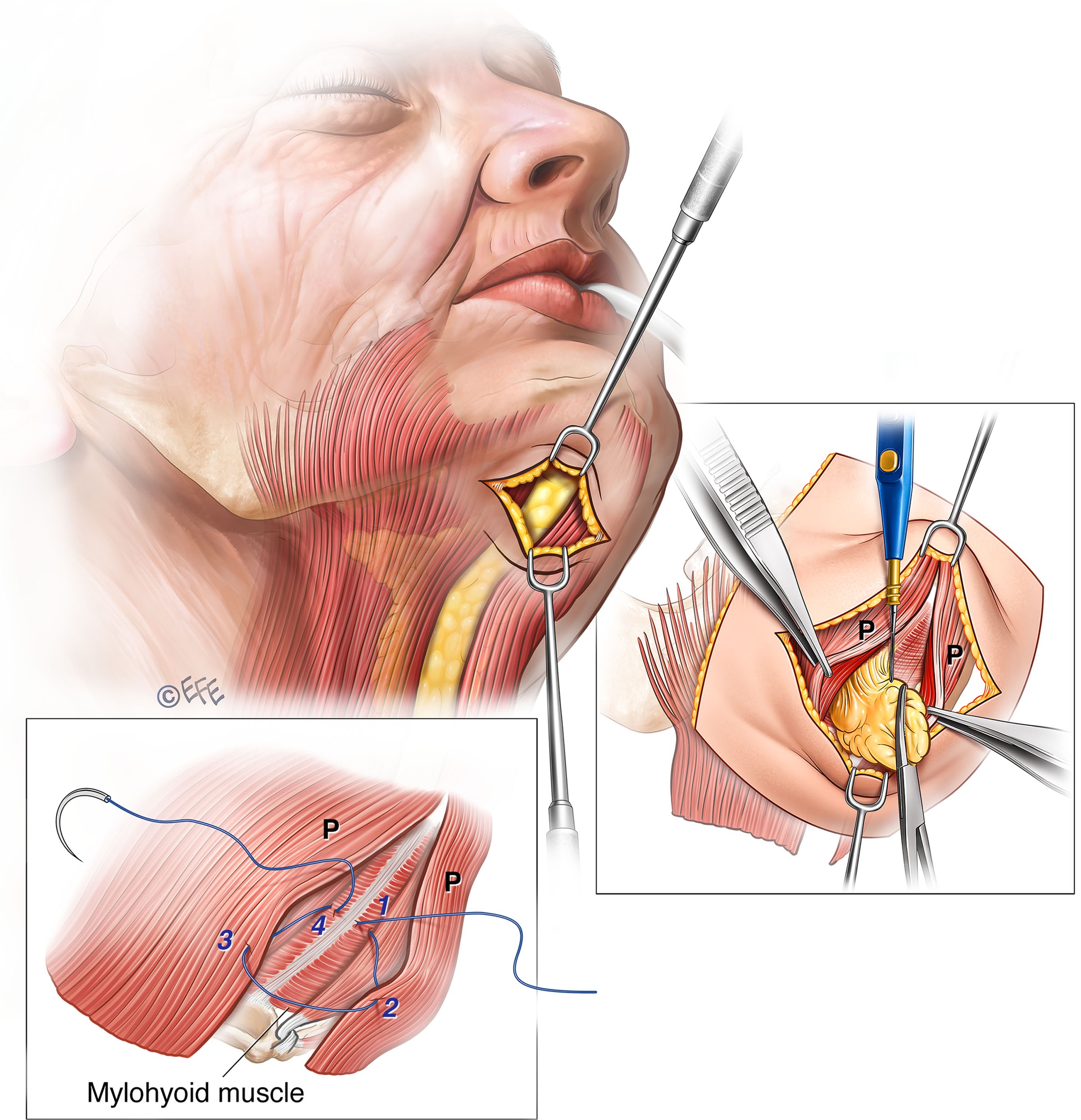
Deep-plane face-lift surgery is not new, having originally been described over 30 years ago; however, the technique has seen a recent surge in popularity. Although proponents emphasize its ability to deliver very natural results, critics often cite the possibility of additional risk of the procedure because of its technically challenging dissection in proximity to branches of the facial nerve and other critical structures. These risks are perhaps greatest when operating in what have historically been described as the “danger zones,” particularly when releasing the zygomatic retaining ligaments, when performing the medial deep plane dissection in the midface, and when extending the platysma flap over the angle of the mandible into the neck. The senior author (D.B.R.) has performed deep-plane face-lift surgery for over 20 years, training many novice surgeons to perform this procedure safely and incrementally. In this article, the authors illustrate surgical techniques to optimize safety when performing deep-plane dissections. A novel vertical midline platysmaplasty combined with extended release of the low cervical platysma provides rejuvenation of the neck that extends to the clavicles.